

|
News
The trial ended with no contact with people and no falls. D1 was tested on visitor guidance, light transport, tea service, tray clearing, and leading exercise.
ZEALS, with Tokyo-based CUC Inc., ran a three-day proof of concept of its compact humanoid D1, built in Japan, at Juko Osu Hospital, part of Keimeikai Medical Corporation, from Wednesday, August 26 through Friday, August 28, 2026.
The trial covered five in-hospital tasks: visitor guidance, light-item transport, preparing tea at a tea dispenser, tray clearing, and leading exercise sessions.
Hospital safety came first. Operating areas and hours were set in advance. ZEALS robotics engineers stayed on site, ready to switch to remote control or an emergency stop if needed. D1 worked around pedestrians, wheelchairs, and clinical staff.
All planned tests were completed over the three days. D1 did not touch anyone and did not fall. The trial showed that, with those safeguards in place, D1 can share space with people in a working hospital and take on several support tasks.
ZEALS will use the field data and staff feedback from this trial to keep testing safety and reliability, and to improve D1's autonomy, task quality, and fit to each site.
D1 site: https://www.omakaserobotics.ai/en
1. Background
Hospitals already face a chronic staffing shortage. Nurses, clinicians, and administrative staff handle a long list of support work on top of patient care, including guiding visitors, moving documents and supplies, serving tea, clearing trays, and making rounds.
That work comes up every day and costs staff time and physical effort. Supporting some of it with technology would let clinicians spend more of their time on patients and on clinical judgment, without lowering the quality of care.
ZEALS has been testing whether humanoid robots can do this kind of work in hospitals.
In March 2026, ZEALS ran a proof of concept at University of Tsukuba Hospital with a commercially available Unitree G1 humanoid running Omakase OS, ZEALS' software suite for humanoids. That trial covered autonomous walking, obstacle avoidance, conversational wayfinding, transport, and anomaly detection. All planned tests were completed, with no contact with people and no falls.
That release is here: https://prtimes.jp/main/html/rd/p/000000190.000019209.html
In June 2026, ZEALS used the dual-arm mobile manipulator Galaxea R1 Pro to move light items and to recognize, pick up, and place supplies for blood-draw preparation. For two-armed work, ZEALS built Omakase Zen, a manipulation model, expanding from the OS into AI, and ran that trial as well.
This trial went a step further. Along with the OS and AI models, ZEALS brought its own hardware: D1, a humanoid designed for Japan's tight indoor spaces. It was D1's first test in a real hospital.
ZEALS put the technology from those earlier trials onto D1 and tested whether conversation, perception, autonomous navigation, and two-armed manipulation could fit the day-to-day work of nurses and nursing assistants.
2. Trial Overview

Period: Wednesday, August 26 to Friday, August 28, 2026
Location: Juko Osu Hospital, Keimeikai Medical Corporation
Robot: compact humanoid D1, built in Japan
Organizer: ZEALS
Partners: CUC Inc. and Juko Osu Hospital, Keimeikai Medical Corporation
The five tasks were run in areas and time windows chosen for safety, based on the hospital's real corridors, equipment, and daily operations.
On day one, D1 was brought in, connected to the network, and mapped to the building. Navigation was tuned, and the guidance task was rehearsed. On day two, guidance, light transport, tray clearing, and tea-dispenser use were tested one at a time. On day three, each task was run again for a final check, and data was collected.
The hospital's own procedures were followed. When patients were involved, the trial was explained in advance, and only people who consented took part. Photos and video were used only within that consent.
ZEALS robotics engineers stayed on site throughout, with remote control and an emergency stop ready. Operating areas were adjusted around hospital traffic and emergency routes. Ordinary hospital work and safety came first.
All planned tests were completed. D1 did not touch anyone and did not fall.
3. Tasks Tested and Results
1. Visitor guidance at the health screening center
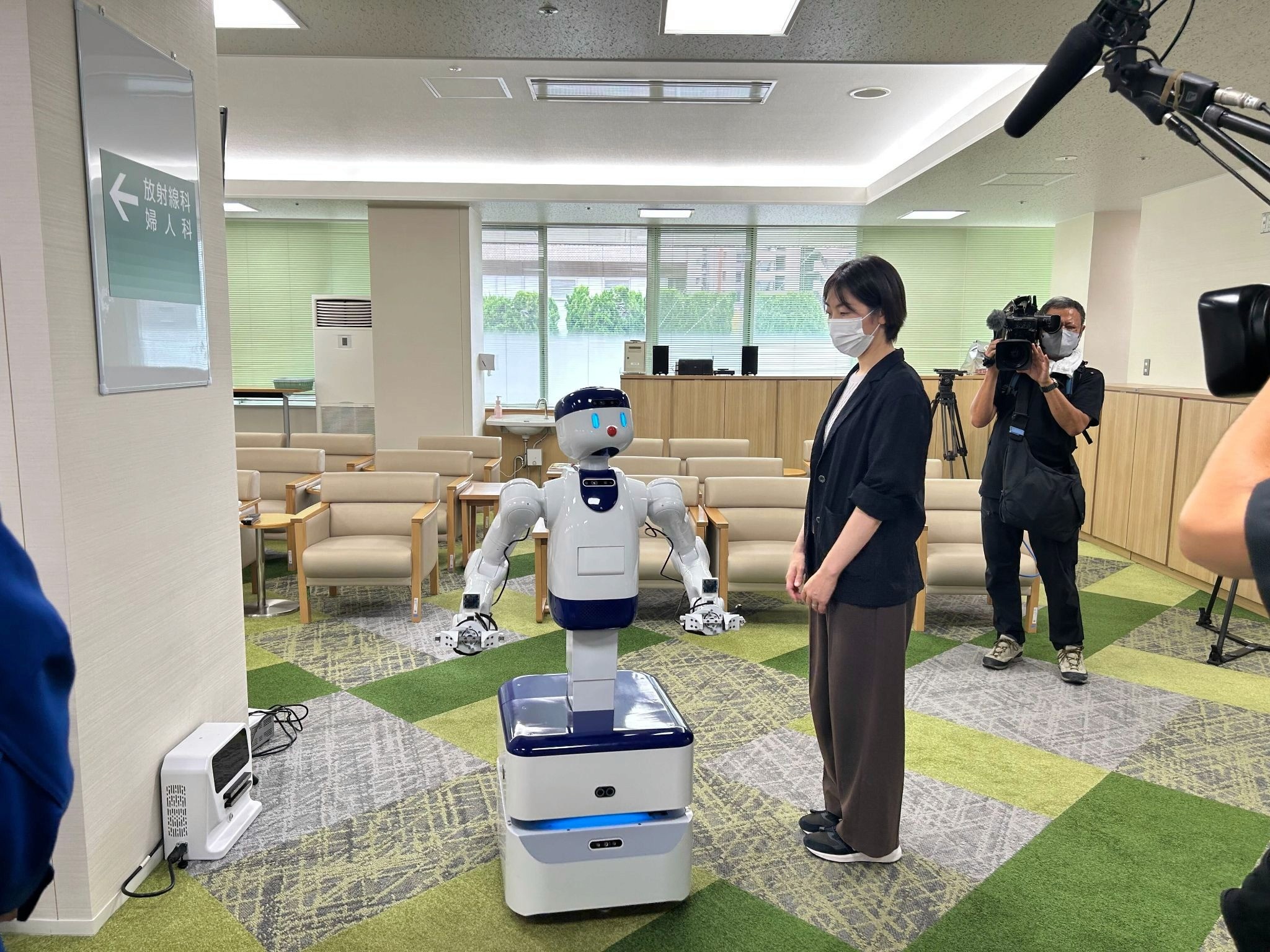
In the first-floor lobby, at reception, and in the health screening center, D1 helped visitors who were unsure how to reach their next exam room. Some screenings at Juko Osu Hospital take place on other floors or in other buildings, so patients get lost, and staff have to help each time. D1 was tested on that guidance work to take some of that load off staff.
D1 asked visitors where they needed to go, then used live camera and sensor data to watch for people and obstacles while walking them toward their destination.
A working hospital is shared by visitors, staff, and people using wheelchairs or crutches. D1 waited inside the screening center so it would not block ordinary work. The trial checked whether talking, guiding, and moving could work on real hospital routes.
What was tested
Guiding visitors around the health screening center
Responding in the language used to address D1
Confirming the destination in conversation
Walking visitors toward that destination
Moving among pedestrians and obstacles
Result: The planned guidance and movement were completed without contact, falls, or other incidents.
2. Light transport among exam rooms, the health screening center, and the community welfare office
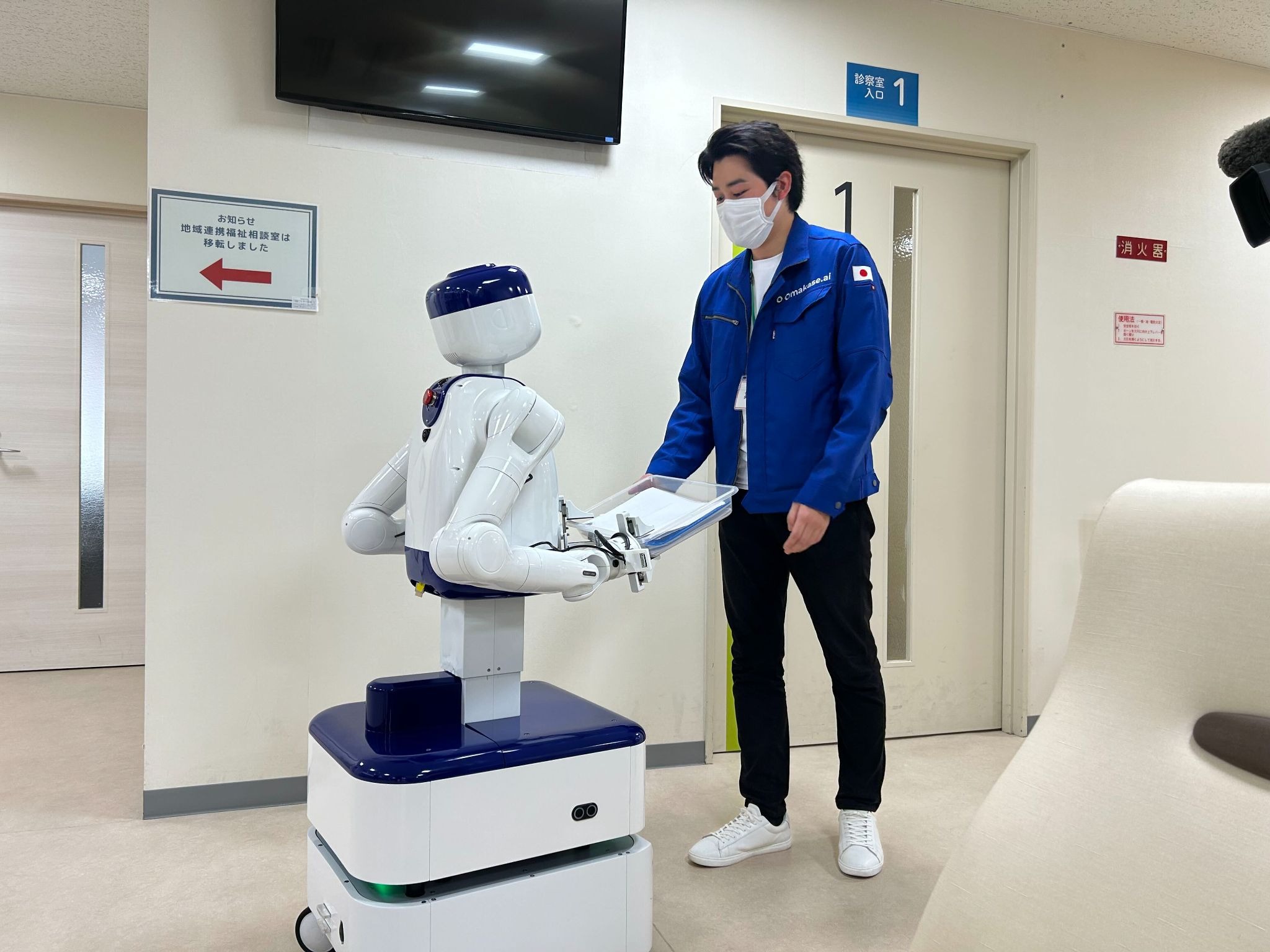
On staff instruction, D1 carried light items such as hospital documents among exam rooms, the health screening center, and the community welfare consultation office. That document run is daily work, and D1 was tested on it to cut the time staff spend on it.
D1 understood spoken instructions and went to the named location. The test was not only walking there. It included holding the items and handing them over at the destination.
What was tested
Understanding spoken transport requests
Moving among exam rooms, the health screening center, and the community welfare office
Holding and carrying light items such as hospital documents
Handing items over at the named place or to a named staff member
Combining guidance and light transport in one run
Result: The full sequence, from the spoken request through autonomous travel and handoff, was completed.
3. Preparing tea at a tea dispenser
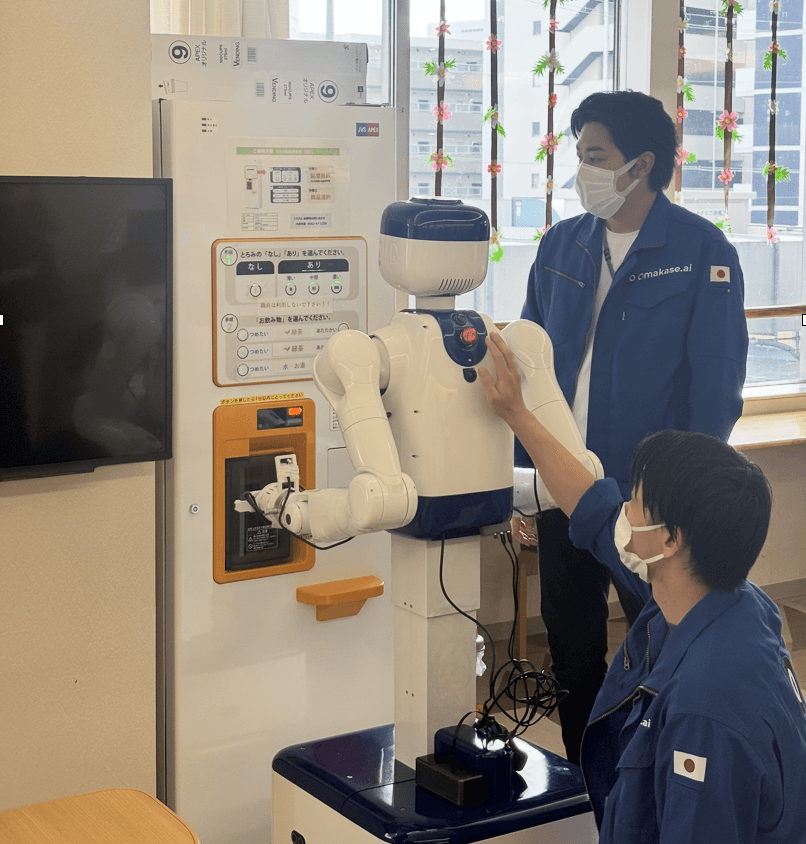
In a ward dayroom, D1 used a tea dispenser to prepare tea with or without thickener, and at the requested strength. Matching thickener to each patient takes staff time. D1 was tested on the dispenser to reduce that work.
D1 tried choosing the right buttons by reading labels on the panel, such as no thickener, thin, medium, and thick, and by following spoken instructions.
This task mixes reading and listening with fine two-arm positioning on a machine, so it was run with remote control. Button-press motion was recorded at the same time, for later work on autonomy.
What was tested
Choosing and pressing buttons by reading the panel
Choosing and pressing buttons from spoken instructions
Announcing by voice when the operation was done
Result: The planned steps were completed, and field data was collected to improve autonomy.
4. Tray clearing support
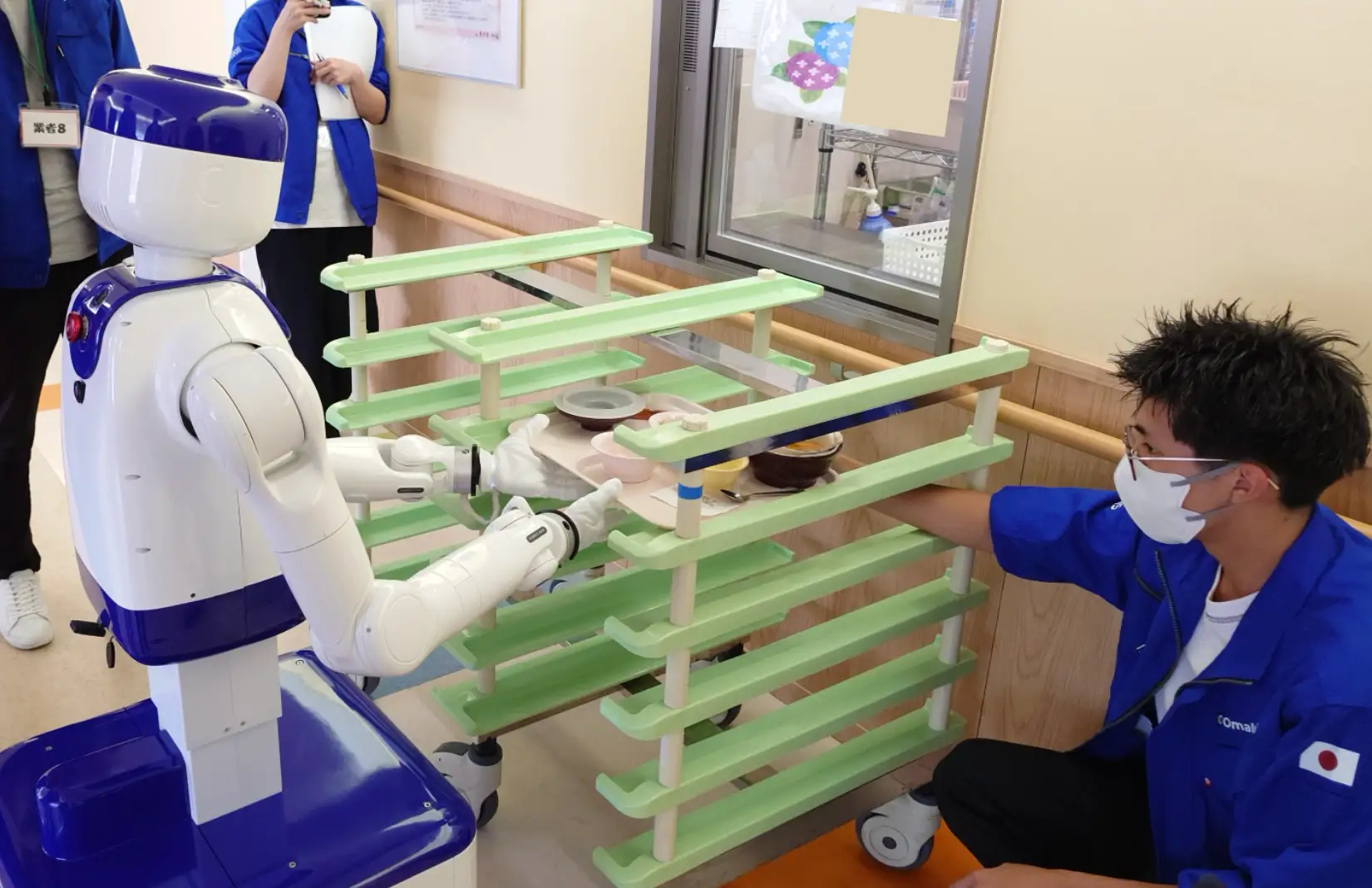
The trial covered clearing trays after a meal and loading them onto a cart. In hospitals, clearing takes as much time as serving, especially checking and recording how much food is left. D1 was tested on that sequence as tray-clearing support.
D1 picked up a tray with dishes on it, kept it level while moving to the cart, and tried placing it on the cart.
A camera and a multimodal model were also used to estimate leftovers, such as rice and side dishes. The longer-term aim is to help staff see what patients ate and to ease the checking and charting that follows.
Picking up a loaded tray, keeping it level, and setting it on a cart all need high precision, so the trial used remote control and other safety measures.
What was tested
Collecting trays with dishes on them
Moving while keeping the tray level
Loading trays onto a cart
Estimating leftovers with multimodal AI
Result: The planned steps were completed, and field data was collected to improve autonomy.
5. Leading exercise
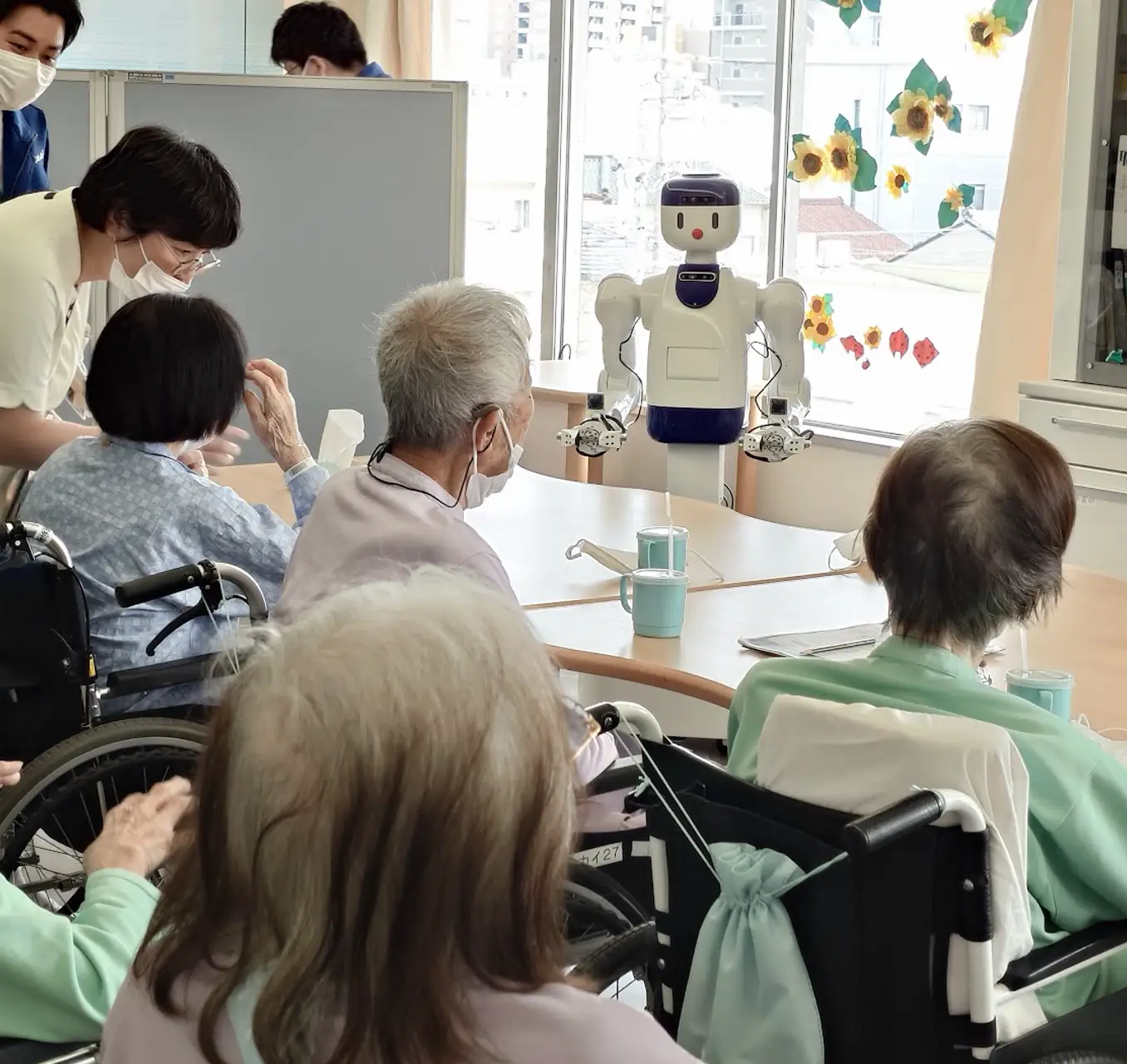
D1 led exercise with patients as a form of recreation support. Ward exercise and recreation are usually run by nurses and nursing assistants. D1 was tested on leading that session to ease that work.
D1 used its arms and body for several exercise moves. Patients followed along by watching D1. Speed and range were adjusted so patients could copy the motion.
The longer-term aim is more recreation in wards and dayrooms, with less of that work falling on clinical staff.
The session was run at a safe distance, with no physical contact, and with safety measures in place.
What was tested
Performing exercise moves with the arms and body
Finding a speed and range patients can follow
Running several moves in a row
Whether this works as recreation done together with patients
Result: D1 completed the planned exercise with patients, showing it could help with recreation.
4. Findings and Next Steps
Two D1 units ran a combined 35 hours over three days. In a working hospital, they were able to take on five different tasks: reception and guidance, light transport, tea service, tray clearing, and leading exercise.
Hours on site were 12 on day one, 16 on day two, and 7 on day three, for 35 hours in total.
On reception, guidance, and light transport, D1 used spoken instructions and live camera and sensor data, watched for people and obstacles, and still reached its destinations. Completing guidance and transport that way is an important step toward putting D1 to work.
On tea service and tray clearing, D1 used both arms for button presses, gripping and carrying trays, and loading a cart. Because the equipment and objects were the ones the hospital actually uses, the trial produced field data that a lab cannot.
Two-arm work still needs more precision before it can run on its own, including where to grip, how much force to use, how repeatable the machine operation is, and how to keep it safe.
ZEALS will keep collecting field data, including from this trial, and will use it to train, evaluate, and improve its models. Autonomy and accuracy on manipulation tasks, starting with tea service and tray clearing, will be raised in stages.
Staff also said that as the workforce shrinks, they want work that does not have to be done by clinicians to go to someone else. ZEALS will take that into improvements on D1 and into how it is operated.
This proof of concept did more than show that D1 can function. It made concrete which hospital tasks a humanoid can take on, and which problems still have to be solved before everyday use.
Comment from Hospital Director Kazutoshi Kurokouchi

"As the working-age population shrinks, hospitals already have a chronic staff shortage, and it is only going to get worse. That is why I believe we will need robots to help fill the gap.
We do not want robots to take clinicians' jobs. If they cover the shortage, clinicians can spend more time with patients and on the work that makes patients feel well cared for. That would be ideal.
The robot's own safety matters, of course. I also think filling the shortage can make the whole hospital safer. This kind of use may add value for the hospital as well. Juko Osu Hospital wants to stay involved in robot development."
Kazutoshi Kurokouchi
Director, Juko Osu Hospital, Keimeikai Medical Corporation
■About D1
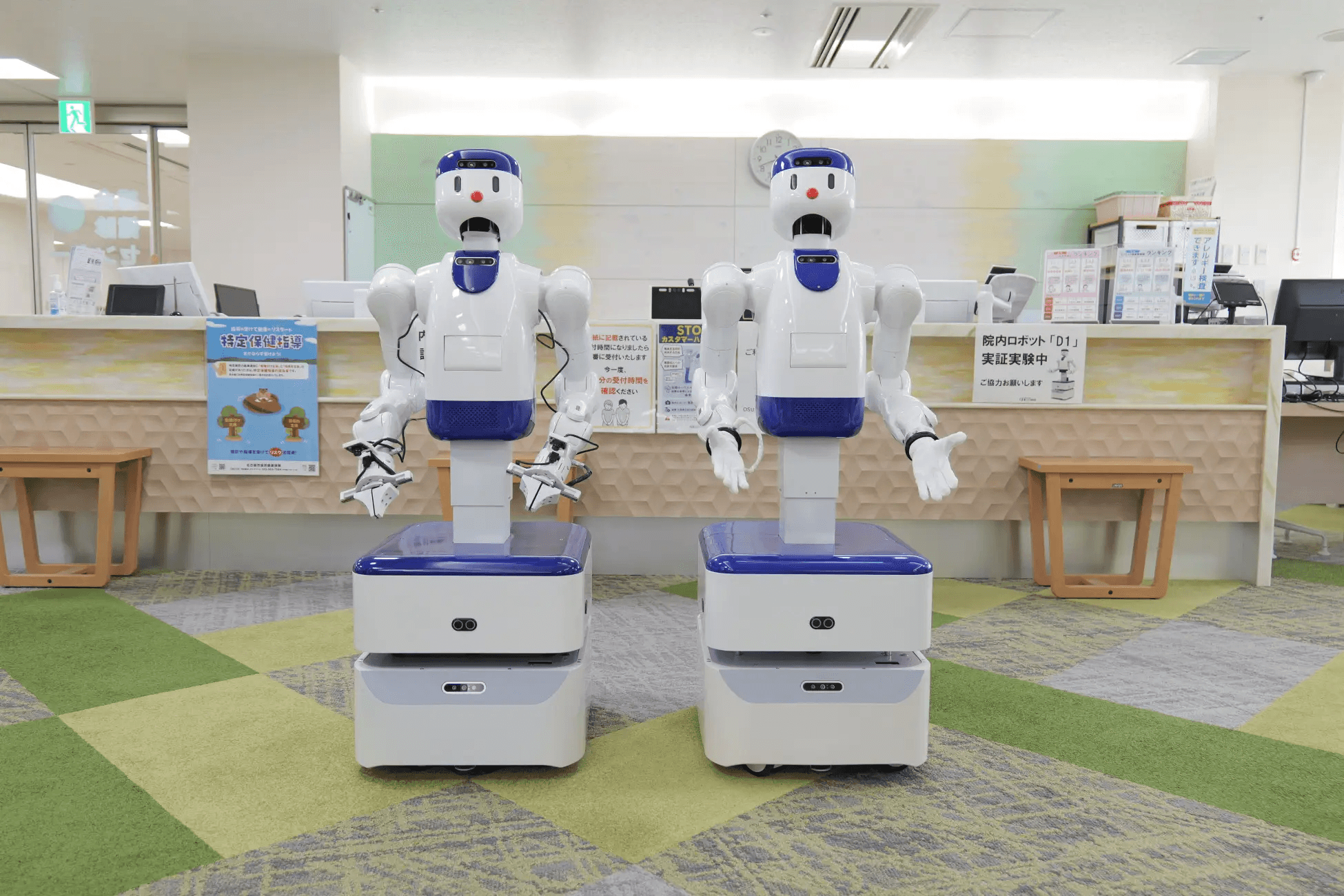
D1 is a compact humanoid built in Japan, designed to share indoor space with people and to take on specific tasks.
ZEALS sources parts and technology worldwide, and leads in Japan on AI, software, control, assembly, and how the robot is introduced and run on site.
D1 stands about 129.3 cm tall, with a mobile base about 48 cm wide. It is being built for natural conversation, reception and guidance, autonomous navigation, obstacle avoidance, and multiple languages, and is being extended into physical work such as preparing supplies, carrying items, and handing them over with two arms.
Pricing is planned to start at JPY 5 million per unit. Sales inquiries opened on August 5, 2026.
■D1 site: https://www.omakaserobotics.ai/en
■About Juko Osu Hospital
Juko Osu Hospital, in Naka-ku, Nagoya, offers outpatient care, inpatient care, health screenings, testing, and rehabilitation.
It opened as Juko Osu Hospital in January 2024, after Juko Memorial Hospital and Osu Hospital merged. It is a regional hospital covering acute care through post-acute rehabilitation, and it also runs emergency care 24 hours a day, 365 days a year.
Operator: Keimeikai Medical Corporation
Hospital: Juko Osu Hospital
Address: 2-17-5 Matsubara, Naka-ku, Nagoya, Aichi
Beds: 250
Website: https://juko-osu-hp.jp/
■About CUC Inc.
Company name: CUC Inc.
Founded: August 8, 2014
Address: 15F, msb Tamachi Tamachi Station Tower N, 3-1-1 Shibaura, Minato-ku, Tokyo
Representative: Keita Hamaguchi, Representative Director
Business: Management support for hospitals, hospice care, home-visit nursing, and related services
Website: https://www.cuc-jpn.com/
■About ZEALS
Company name: ZEALS Co., Ltd.
Founded: April 1, 2014
Capital: JPY 100 million
Address: 6F Arco Tower, 1-8-1 Shimomeguro, Meguro-ku, Tokyo
Representative: Masa, Founder and CEO
Business: Omakase AI, Omakase OS, ZEALS AI Agent, and related products
Website: https://zeals.ai/en/
D1 site: https://www.omakaserobotics.ai/en